
Published: November 10, 2025
By Alex Rivera, Blockchain Analyst
Alex has tracked cryptocurrency markets since 2016 and covers DeFi, NFTs, and altcoin trends.
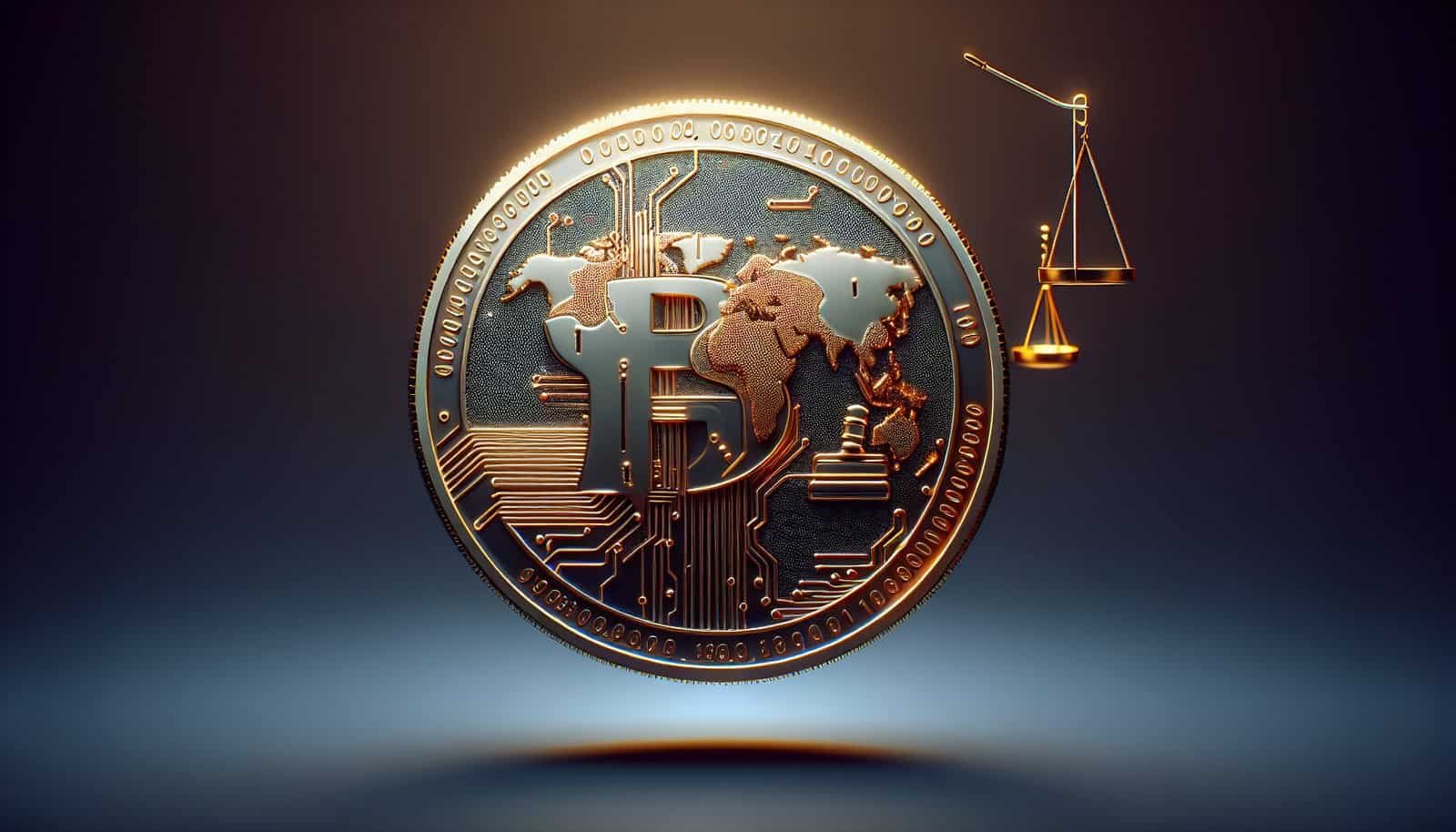
How are crypto exchange rules changing around the world in 2025, and what does that mean for the platforms that also sell NFTs?
Overview of the 2025 regulatory landscape for crypto exchanges
You’re seeing a more mature global approach to crypto exchange oversight in 2025. Regulators are converging on common themes—licensing, KYC/AML, custody standards, and clearer treatment of tokens as securities or commodities—while national priorities create significant differences you need to understand.
Regimes now tend to fall into three broad categories: (1) permissive and innovation-focused with strong licensing frameworks, (2) restrictive or prohibitive, and (3) transitional or uncertain where legal classification and enforcement are still evolving. Each path affects how exchanges operate, what services they can offer, and whether they can expand into areas like NFT marketplaces.
Why country-level differences matter to you
Where an exchange is based, where it is licensed, and which customers it serves directly influence the legal protections available to you. These differences affect deposit insurance (if any), dispute resolution avenues, taxation, and the range of products the exchange can offer in your country.
When you choose an exchange or use an NFT marketplace offered by an exchange, you should check the exchange’s licensing, local compliance status, and the regulatory environment of your own country. That informs both safety and what to expect if something goes wrong.
Global themes shaping regulations in 2025
You’ll notice several recurring policy priorities across jurisdictions. Regulators prioritize consumer protection, anti-money-laundering, market integrity, and financial stability risks from stablecoins. Central banks and securities regulators are increasingly coordinating responses to crypto-native risks.
Regulatory sandboxes and licensing windows remain popular for controlled innovation, but fewer countries tolerate unregulated cross-border marketing of crypto services. This trend affects how exchanges expand and whether they can add NFT services in regulated markets.
Quick comparative summary table (major jurisdictions)
You can use this table as a quick reference to identify major differences in approach. It summarizes licensing, KYC/AML treatment, token classification trends, and NFT marketplace permissibility in 2025.
| Jurisdiction | Licensing & Registration | KYC/AML & Reporting | Token classification | Stablecoin stance | NFT marketplace permissibility |
|---|---|---|---|---|---|
| United States | Complex: federal enforcement + state charters (e.g., BitLicense); no single federal license | Strong AML/CFT; FinCEN and IRS reporting; customer ID regimes | Mix: SEC treats many tokens as securities; CFTC treats some as commodities | Active scrutiny; proposals for issuer rules and reserves | Exchanges may host NFTs, but securities rules and tax reporting create hurdles |
| European Union (MiCA era) | Harmonized via MiCA for crypto-asset service providers (CASPs) | Standardized AML/CFT; PSD2 interfaces for fiat on/off ramps | Clearer definitions under MiCA; certain tokens regulated as e-money tokens | Formal rules for asset-referenced tokens and e-money tokens | Easier for licensed exchanges to offer NFT marketplaces under CASP rules |
| United Kingdom | FCA registration and anti-scam frameworks; licensing evolving post-Brexit | Strong AML/CFT; cryptoasset promotions regime | Hybrid treatment; FCA recognizes tokens as cryptoassets, potential securities tests | Prudential and disclosure focus on stablecoins | Licensed exchanges can run NFT markets, subject to consumer protection rules |
| China | Prohibitive: trading and services are banned; strict enforcement | Heavy surveillance for crypto activity; crypto services blocked | Crypto trading effectively prohibited; CBDC promoted | Private stablecoins disallowed; CBDC focus | NFT-like digital collectibles allowed in tightly controlled forms, not traditional NFT marketplaces |
| Hong Kong | Licensing for virtual asset service providers (VASPs) | Enhanced AML/CFT; custody and segregation rules | Regulatory clarity improving; securities tests applied by SFC | Licensing and reserve requirements for stablecoin issuers | Permitted under license; exchanges expanding NFT functions |
| Japan | Strict registration and supervision under FSA | Strong custody and segregation rules; AML/CFT enforced | Tokens classified on case basis; stronger consumer protections | Tight rules for stablecoins and issuer disclosure | Registered exchanges can support NFT marketplaces with compliance |
| Singapore | MAS licensing (Payment Services Act + VASP guidance) | Strong AML/CFT; sandbox for innovation | Clear guidance on token classification and payment tokens | Active regulation for stablecoins under payment laws | Exchanges add NFTs under licensed framework |
| UAE (Dubai/ADGM) | VARA/ADGM frameworks for licensing | AML/CFT standards in free zones; differing emirate rules | Progressive licensing and clarity for tokens | Hosted frameworks for stablecoin issuance | Exchanges expanding NFT platforms under local licenses |
| India | Evolving: tax rules and regulatory proposals; state-level variance | KYC/AML tightening; 1% TDS on certain crypto transactions (2022) | Legal status under debate; regulatory proposals continue | Fiat/crypto interface under scrutiny | Marketplaces operate but face regulatory uncertainty |
| Brazil | Regulators (CVM/BACEN) increasing oversight | AML/CFT; tax reporting evolves | Recognition of crypto as assets; securities rules applied case-by-case | Central bank interest in CBDC; stablecoin guidance emerging | Exchanges increasingly offer NFT services under oversight |
| Nigeria & South Africa (Africa) | Mixed: higher scrutiny in some states; growing licensing efforts | AML/CFT enforced; informal markets persist | Varies: central banks cautious; securities agencies assert control | Central bank caution on stablecoins | Some exchanges and marketplaces operate, often with regional constraints |
North America: United States and Canada
You should expect a fragmented but active regulatory scene in North America. The U.S. lacks a single federal crypto regulator, which creates complexity for exchanges that serve U.S. customers.
United States
You must navigate a patchwork of federal agencies, state regulators, and enforcement actions. The SEC takes an assertive approach toward token securities, the CFTC asserts jurisdiction over some crypto derivatives, FinCEN enforces AML rules, and individual states (like New York’s BitLicense) impose separate licensing.
This means exchanges offering spot trading, derivatives, custody, or NFT marketplaces to U.S. users face layered requirements: federal reporting, potential securities registration, and often state-level licensing. You should watch for enforcement trends and case law that continue to shape whether certain tokens and NFT-like products are treated as securities.
Canada
If you use a Canadian exchange or are a Canadian resident, expect a securities-focused approach: provincial securities commissions require registration for trading platforms dealing in crypto assets deemed securities. Anti-money-laundering is robust, and exchanges must adhere to provincial requirements and consent orders.
Canada tends to favor consumer protection and prudential oversight. NFT marketplaces run by exchanges must be careful when NFTs are marketed with investment-like features, as regulators can treat them as securities.
European Union and United Kingdom
You’ll find more harmonized rules in the EU with the Markets in Crypto-Assets Regulation (MiCA) in force. The UK has its own evolving regime post-Brexit.
European Union (MiCA era)
MiCA provides a single rulebook for crypto-asset service providers across the EU member states, covering authorization, governance, disclosure, and stablecoins. As a user, you benefit from standardized investor protections and clearer issuer responsibilities.
MiCA clarifies obligations for exchanges that want to offer custody, trading, or NFT markets—particularly when NFTs cross into financial instrument territory. Exchanges licensed under MiCA can passport services across the EU, simplifying expansion compared to pre-MiCA fragmentation.
United Kingdom
You must follow the FCA’s rules on registration, anti-scam measures, and money laundering checks. The UK has been building consumer protection regimes specific to crypto promotions and is likely to require clear disclosure when exchanges offer NFT marketplaces, especially if NFTs are sold with investment promises.
The UK focuses on preventing harm while enabling services; expect licensing requirements, marketing rules, and taxation clarity to shape exchange operations.
Asia: China, Hong Kong, Japan, South Korea, Singapore, India
Asia contains the broadest divergence: from China’s near-total bans to Singapore’s permissive but tightly regulated approach. Your experience depends heavily on where the exchange is based and where you reside.
China
If you’re in mainland China, most retail crypto trading and exchange services remain effectively banned. The government enforces broad prohibitions on foreign and domestic exchanges, and mining was curtailed. The state promotes the digital yuan (CBDC) and has created a distinct space for regulated “digital collections” that don’t function as tradable crypto assets.
Consequently, traditional NFT marketplaces operated by global exchanges are inaccessible or heavily limited to Chinese users, and any exchange targeting China must comply with stringent prohibitions.
Hong Kong
You’ll find a proactive licensing framework for virtual asset service providers (VASPs). Hong Kong requires exchanges to obtain licenses, meet custody standards, and comply with investor protection and AML rules.
This makes Hong Kong attractive for exchanges aiming to serve Asia-Pacific customers and to extend services into regulated NFT marketplaces, provided those marketplaces avoid mis-selling NFTs as investment products.
Japan
Japan maintains a strict registration system under the Financial Services Agency (FSA). You should expect high standards for custody, segregation of customer assets, and AML compliance.
Exchanges in Japan can operate NFT marketplaces, but they must manage consumer protections carefully—especially given Japan’s history of prioritizing user asset safety after several exchange failures.
South Korea
You must follow strict AML/KYC and real-name account rules when using Korean exchanges. The Financial Services Commission and local regulators monitor token listings and platform conduct closely.
Exchanges expanding into NFTs in Korea must ensure clear disclosures and guardrails against speculative manipulation, as regulators are sensitive to market instability.
Singapore
Singapore’s Monetary Authority of Singapore (MAS) balances innovation with firm regulation. Under the Payment Services Act and relevant VASP guidance, you can access exchanges that offer NFT marketplaces, provided they meet licensing, AML, and custody standards.
MAS encourages responsible product design and has used sandbox programs for compliant NFT and token projects.
India
You should expect an evolving legal landscape. India has enacted taxation rules and applied reporting obligations, but comprehensive licensing and a definitive legal classification for tokens remains in flux. Exchanges operating NFT marketplaces often face uncertainty over how NFTs are categorized for securities and consumer protection purposes.
India’s regulators are increasingly focused on taxation, AML, and potential fraud prevention.
Middle East: UAE, Saudi Arabia, other Gulf states
You’ll notice the UAE, especially Dubai and ADGM/Abu Dhabi, positioning itself as a crypto hub through tailored licensing regimes.
UAE (Dubai/ADGM/VARA)
You can find specialized regulators: ADGM, the Dubai Virtual Asset Regulatory Authority (VARA), and others. These frameworks provide clear licensing pathways, custody rules, and AML obligations that allow exchanges to offer NFT marketplaces to compliant users.
The UAE’s approach is often pro-business, attracting exchanges that want a Middle East base, but compliance with VARA or ADGM rules is mandatory for regulated activity.
Saudi Arabia and other Gulf states
Regulatory approaches are more cautious and vary across the Gulf. Some authorities are issuing guidelines or sandbox opportunities; others restrict certain crypto activities. If you use exchanges aimed at Gulf customers, check local permissions and the exchange’s licenses in the relevant free zone or regulator.
Latin America: Brazil, Argentina, Mexico
You’ll find growing regulatory activity as countries respond to rising crypto adoption and cross-border capital flows.
Brazil
Brazilian authorities (CVM and Central Bank) have been increasing oversight, applying securities laws where tokens look like securities, and addressing AML. Exchanges that launch NFT marketplaces in Brazil need to align with consumer protection rules and tax reporting.
Argentina and Mexico
Regulatory clarity varies. Argentina has high inflation and strong crypto adoption, but oversight is evolving. Mexico has registration requirements for VASPs and AML rules. Exchanges expanding NFT services often need to navigate different tax regimes and reporting standards.
Africa: Nigeria, South Africa, and regional trends
Crypto adoption is high in parts of Africa, but regulation is uneven and often more restrictive for cross-border services.
Nigeria
Nigeria’s central bank has historically discouraged crypto usage, though peer-to-peer activity continues. You should be cautious when using exchanges there; many regulatory constraints and enforcement actions can affect service availability.
South Africa
South Africa is moving toward stronger regulation, with the Financial Sector Conduct Authority (FSCA) drafting frameworks to bring VASPs under formal oversight. Exchanges offering NFTs must adhere to emerging AML and consumer protection rules.
Enforcement, penalties, and what you should watch for
Regulators are using fines, civil actions, and criminal prosecutions to enforce compliance. You need to monitor ongoing enforcement cases and license revocations because they can abruptly change an exchange’s ability to serve your country.
Watch for:
- Revocation of licenses or emergency bans
- High-profile enforcement against token issuers and exchanges
- New reporting and tax obligations for NFT sales and trading
- Court decisions that clarify whether NFTs or tokens are securities
If an exchange you use faces enforcement, your access, custody of assets, and legal remedies might be affected.
Custody, insurance, and consumer protection differences
You should check whether exchanges are required to segregate client assets, hold custody insurance, or participate in compensation schemes. Requirements vary widely by jurisdiction.
In some EU countries and under MiCA, you’ll see stronger custody and disclosure requirements. Japan and the UK impose robust custody standards. In many other places, protections are more limited, making counterparty risk a key consideration.
Taxation of crypto trades, NFTs, and cross-border issues
Tax rules for crypto and NFTs are still diverse. You should expect:
- Capital gains or income tax on sales and transfers in many countries
- Specific withholding or reporting rules for high-volume marketplaces
- VAT/GST treatment of NFTs differs: some jurisdictions tax digital goods; others apply exemptions
- Tax treatment can hinge on whether an NFT is seen primarily as a collectible, a digital right, or an investment
You should consult local tax guidance or a tax advisor for NFT sales and marketplace activity, especially when you trade across borders.
Which exchanges are expanding into NFT marketplaces in 2025?
You likely already know that many major exchanges have either launched or expanded NFT offerings. By 2025, established centralized exchanges and crypto-native platforms have been pursuing NFT marketplaces to diversify revenue and bring on-chain activity to mainstream users.
Here are high-level categories and examples you should be aware of:
Large centralized exchanges with NFT arms
You’ll encounter major centralized exchanges that launched NFT marketplaces to leverage their user bases and fiat rails:
- Binance (Binance NFT) — continued emphasis on creator drops, partnerships, and multi-chain support.
- Coinbase (Coinbase NFT) — focused on mainstream UX and integration with Coinbase custody and fiat on-ramp (market presence may vary by jurisdiction).
- OKX and KuCoin — both operating NFT marketplaces with emphasis on cross-chain support and project launches.
- Bybit and Huobi — offering NFT marketplaces driven by trading volume and marketing partnerships.
These platforms aim to combine custody services, fiat payment options, and user-friendly NFT browsing to attract mainstream collectors and creators.
Exchanges bridging to web3 and marketplaces
You’ll also see exchanges wanting to integrate marketplace functionality with DeFi or wallets:
- Kraken and Gemini have signaled interest in NFTs historically; some have launched pilot NFT features or partnered with NFT platforms.
- Smaller regional exchanges may add NFT marketplaces tailored to local creators and languages.
When you use NFT marketplaces on exchanges, check token standards supported (ERC-721, ERC-1155, or others) and whether the marketplace supports on-chain royalties and cross-chain bridges.
Decentralized finance platforms and NFT marketplaces
You can access many NFT marketplaces built on decentralized infrastructure, but exchanges are increasingly partnering with or acquiring these platforms to enter the space:
- OpenSea remains an independent major marketplace, but exchanges may integrate listings or liquidity features.
- Exchanges sometimes provide fiat-to-NFT rails by partnering with wallet providers and on-chain marketplaces.
Considerations about exchange-run NFT marketplaces
If you use an NFT marketplace run by an exchange, consider:
- Custody model: Are NFTs custodied off-chain or on-chain? Off-chain custody can create counterparty risk.
- Legal character: Does the marketplace market NFTs as collectibles or investment products? Marketing matters for securities classification.
- Fees and royalties: Exchanges may alter royalty enforcement or implement separate fee structures from decentralized marketplaces.
- KYC/AML: Expect stronger KYC for higher-value drops and secondary market trades on centralized platforms.
Cross-border listing and token delisting practices
You should note that exchanges often delist tokens or restrict services by jurisdiction to comply with local regulators. This affects NFTs too—if an NFT is wrapped into or tied to a token that regulators consider a security, exchanges may block access in some countries.
Cross-border restrictions can also target payment channels. Exchanges might stop fiat deposits/withdrawals for specific regions, limiting your ability to cash out NFT proceeds locally.
How to choose an exchange for trading crypto and NFTs in 2025
You can apply a checklist to pick a reliable exchange and NFT marketplace:
- Licensing and jurisdiction: Prefer exchanges licensed in respected jurisdictions, and check whether they are allowed to serve your country.
- Custody and segregation: Look for custody disclosures and whether the exchange segregates customer assets or uses qualified custodians.
- AML/KYC practices: Robust KYC is a sign of compliance but can affect privacy.
- Insurance and protections: Confirm what insurance covers and what it excludes.
- Token and NFT listing policy: Review how the exchange vets token and NFT projects for fraud and misrepresentation.
- Fees and marketplace mechanics: Compare listing, buyer, seller, and minting fees and how royalties are enforced.
- Dispute resolution: Check the exchange’s customer support and clear dispute processes.
Using this checklist helps reduce your operational and legal risk when trading NFTs or other crypto assets.
Practical steps for users in different regulatory environments
You should tailor actions to your jurisdiction and risk tolerance.
- If you’re in a permissive jurisdiction (EU under MiCA, Singapore, Japan), choose licensed exchanges and use on-chain options for custody when possible.
- If you’re in a restrictive jurisdiction (China, some African states), use regulated local services or licensed offshore exchanges with caution, being mindful of local law on access and reporting.
- If rules are uncertain (India, some Latin American countries), keep detailed records for tax compliance and prefer exchanges with conservative compliance practices.
Always maintain secure personal custody practices: use hardware wallets for NFTs you want to securely own off a marketplace, and withdraw to self-custodial wallets if you don’t require on-exchange liquidity.
Risks and future regulatory flashpoints you should watch
You’ll want to monitor a few key areas that will shape how exchanges and NFT marketplaces operate going forward:
- Securities classification of NFTs: Regulators may focus on NFTs sold as profit-generating assets or fractions that resemble securities.
- Stablecoin regulation: New rules for reserves, transparency, and issuer licensing affect fiat on/off ramps and NFT payments.
- AML and transaction monitoring: Expect stricter provenance checks for high-value NFTs to prevent illicit finance.
- Cross-border data sharing and client reporting: Increased international cooperation may make anonymous trading harder.
- Decentralized vs centralized custody legal battles: How regulators treat custodial vs non-custodial services will determine market structure.
Staying informed helps you protect your assets and choose platforms aligned with your objectives.
Final recommendations for your use of exchanges and NFT marketplaces in 2025
You should take a pragmatic, compliance-aware approach:
- Verify licensing for the exchange in both the exchange’s base jurisdiction and in your country.
- Prefer exchanges that clearly disclose custody models and insurance limits.
- Use on-chain custody (self-custody) for NFTs that you value long-term and do not intend to trade frequently.
- Keep records for tax and compliance: minting dates, sale prices, wallets, and fiat conversions.
- Monitor regulatory news that affects a platform’s ability to operate in your jurisdiction and adjust the platforms you use accordingly.
If you follow these steps, you’ll be better positioned to enjoy NFT innovation while minimizing regulatory and counterparty risk.
Closing thoughts on a changing market
By 2025, you’re navigating a crypto ecosystem that’s far more regulated than a few years prior. This brings trade-offs: better consumer protection and clearer legal recourse, but also more requirements for platform compliance and user identity verification.
When exchanges expand into NFT marketplaces, the promise of easier access and fiat rails is real—but so are legal complexities that vary by country. Use licensed platforms, keep good records, and favor custody approaches aligned with your risk tolerance to make the most of the evolving space.
Sources
The guidance in this article is informed by the following authoritative sources:
- U.S. Securities and Exchange Commission (SEC) — Regulator guidance and investor protection resources for digital assets.
- CFTC — Press Room — Commodity Futures Trading Commission market data and regulatory updates.
- CoinGecko — Market Data — Independent on-chain and market data referenced for token metrics.
External links open in a new tab. Verify current details with the source before relying on them.