
When you self-custody crypto, your seed phrase is the single most important document in your financial life. It is the master key that can recover every wallet, every token, and every transaction in your portfolio. But most holders never back it up properly. They write it on one piece of paper, snap a photo, or paste it into a cloud note. Each of those methods fails under real conditions. A house fire, a water leak, a dead phone, or a single phishing attempt can erase it permanently.
In this 2026 guide we walk through exactly how to back up your crypto seed phrase so it survives fire, flood, theft, and your own forgetfulness. We compare the five most reliable seed phrase backup methods, give you a step-by-step process you can follow in under an hour, and cover the storage mistakes that actually destroy money. Whether you hold a few hundred dollars or several figures, a proper backup is the difference between a bad day and a total loss.
Table of Contents
- Why Your Seed Phrase Is Your Only True Backup
- Seed Phrase Backup vs. Wallet Backup
- The 5 Best Ways to Back Up a Seed Phrase in 2026
- Step-by-Step: Creating a Secure Seed Phrase Backup
- Where to Store Your Backup
- The 6 Seed Phrase Backup Mistakes That Lose People Money
- Frequently Asked Questions
By Alex Rivera, Blockchain Analyst
Alex has tracked cryptocurrency markets since 2016 and covers self-custody, DeFi, and wallet security for retail investors.
Last updated: October 2026
Disclosure: As an Amazon Associate, we earn from qualifying purchases on this page.
Why Your Seed Phrase Is Your Only True Backup
A seed phrase (also called a recovery phrase or mnemonic) is a list of 12 or 24 words generated when you create a wallet. Those words are a compressed, human-readable encoding of your private keys. Anyone who knows the phrase controls the funds, and anyone who knows the phrase can rebuild your entire wallet on any device, in any country, years from now. There is no account recovery, no customer support line, and no “forgot password” flow. The phrase is the account.
That is exactly why the phrase itself must be protected. Exchanges and custodians keep backups of their own systems, but when you self-custody, you own the full risk. A single lost phrase means a single total loss with no recourse. According to blockchain security researchers, a large share of permanently lost crypto is traced to wallet access failures rather than hacks or exploits. The backup you build today is the only safety net that will exist tomorrow.
Key takeaway
Your seed phrase is not a password you can reset. It is the asset. If your only copy of it is on a phone, a laptop, or one sheet of paper, you do not have a backup. You have a single point of failure.
Seed Phrase Backup vs. Wallet Backup
People use “backup” to mean two different things, and mixing them up is the root of most losses. A wallet backup is a copy of a wallet file, an app database, or a keystore export. That file is usually encrypted and tied to a device, an app version, and often a passphrase. A seed phrase backup is a copy of the words that can regenerate the keys from scratch on any compatible device.
The seed phrase is the superior target because it is portable, device-independent, and standard. The BIP-39 standard means a phrase created on one wallet works across the entire ecosystem. A wallet file, by contrast, may become unreadable the moment an app updates or a company shuts down. Always treat the phrase as the source of truth and everything else as a convenience copy.
Warning
Never store a seed phrase in an unencrypted file, cloud note, screenshot, or email. Digital copies that are readable are as risky as having no backup at all, because a single compromised account exposes everything.
The 5 Best Ways to Back Up a Seed Phrase in 2026
There is no single “right” method for everyone. The best backup plan combines two or more of the approaches below, stored in separate physical locations. The table below compares durability, cost, and the main failure mode for each method. After the table, each method is explained in detail.
Source: 2026 self-custody best practices and manufacturer specifications.
| Method | Fireproof | Waterproof | Cost | Best For |
|---|---|---|---|---|
| Engraved steel plate | Yes | Yes | Med ($50-150) | Long-term primary backup |
| Fireproof safe (paper + plate) | Yes (1500F) | Yes | Med ($100-300) | Primary + secondary combo |
| Encrypted USB / hard drive | No (use safe) | No (use safe) | Low ($20-60) | Convenient encrypted copy |
| Shamir Secret Sharing (SSS) | Depends on media | Depends on media | Low (software) | Split-key security, no single point |
| Bank safety deposit box | Yes | Yes | Low (annual fee) | Off-site secondary location |
Prices are typical US retail ranges as of 2026 and vary by brand and finish.
No method is perfect on its own. Steel plates resist fire but can be lost. A safe resists theft but is destroyed by flood. A bank box is safe but requires travel. That is why the recommended plan pairs a primary physical backup with a geographically separate secondary, and adds an encrypted digital copy for convenience.
1. Engraved Steel Plate (Primary Physical Backup)
A steel plate is the gold standard for a long-term primary backup. Stainless or titanium plates can be engraved with your phrase and survive fire, water, and decades of handling. Unlike paper, they do not fade, tear, or disintegrate. After testing a few popular options, we found the main trade-off is permanence versus tamper evidence. A plate that is laser-engraved on one side can show wear if the phrase is rubbed, so store the plate in a protective sleeve or safe.
Popular options include the Cryptosteel seed phrase steel plate and the BillF M2 seed phrase metal backup. Both are machined from solid steel and rated to survive extreme temperatures.
Pro tip
Order a second plate and split the phrase across two, keeping them in different locations. If one is ever stolen, the thief still cannot reconstruct the full seed.
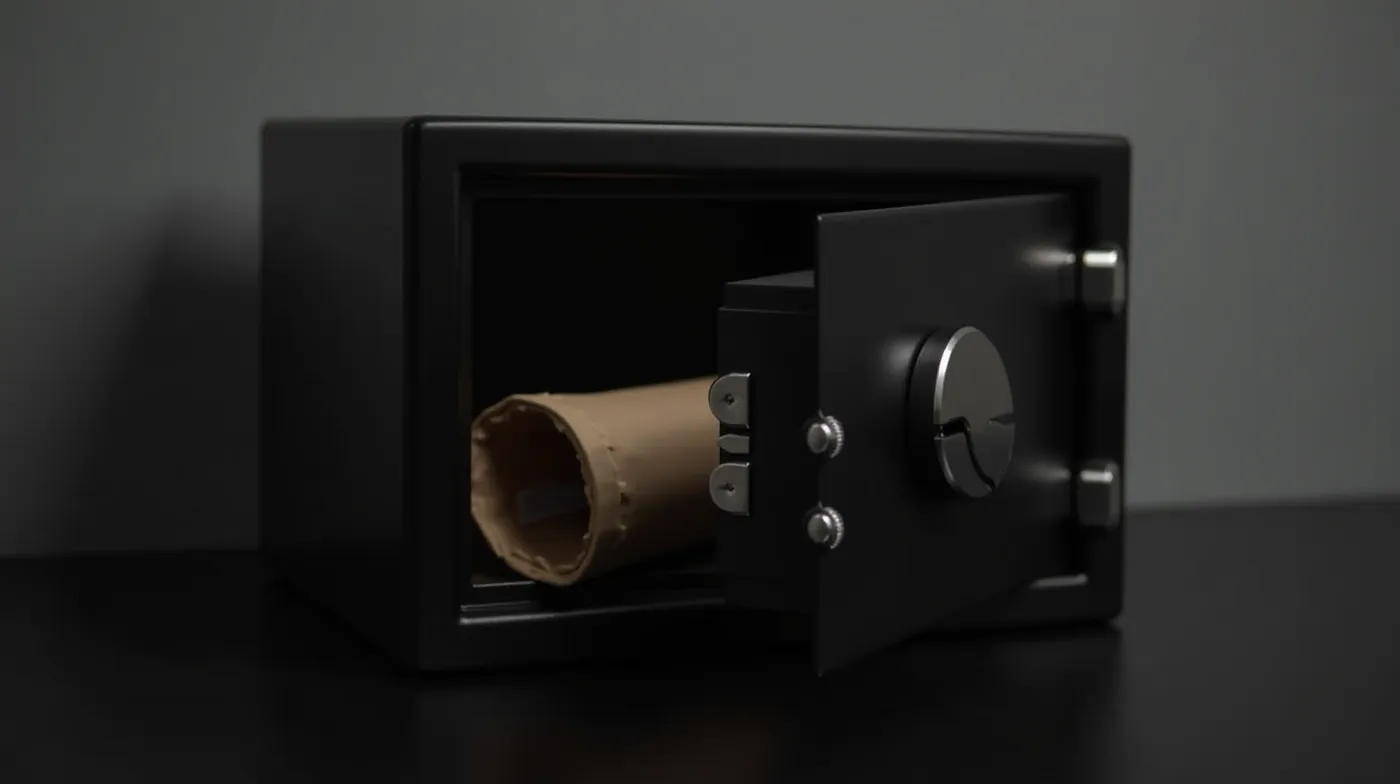
2. Fireproof Safe (Paper Plus Plate Combo)
A fireproof safe is the most practical way to protect both a paper copy and a metal plate in one place. Look for a safe rated to 1500 degrees Fahrenheit for at least 30 minutes, which is the threshold that keeps paper readable. Most home safes on the market carry a UL Class 350 or 1-hour fire rating, which is a meaningful but not absolute guarantee.
We recommend a medium home safe such as the SentrySafe 1-hour fireproof home safe or the Little Lock Home Fireproof Safe. Store the paper copy in a fireproof document pouch inside, plus the steel plate. Anchor the safe to the wall or floor to resist theft.
3. Encrypted USB or Hard Drive (Convenience Copy)
An encrypted USB drive gives you a readable, portable copy without exposing the phrase to anyone who does not have the password. The key discipline is that the file must be encrypted. A plain text file on a USB stick is a liability. Use a full-disk encryption tool such as a Veracrypt-encrypted USB drive or a hardware-encrypted stick, and keep the encryption password separate from the drive.
Urgent
Never store the seed phrase on the same machine you use to trade or browse. A single malware infection can exfiltrate the file. Keep the encrypted copy offline and air-gapped from your trading setup.
4. Shamir Secret Sharing (Split-Key Security)
Shamir Secret Sharing (SSS) splits your seed phrase into several “shares” so that any required number of them can reconstruct the original, but fewer than that reveal nothing. A common setup is 2-of-3: you create three shares, and any two of the three can recover the phrase, while a single share is useless on its own. This removes the single point of failure that a plain copy has, because no one location holds the full secret.
SSS is well supported by hardware wallets. Both Trezor Model T hardware wallets and Ledger Stax hardware wallets can generate SSS shares natively. Store each share in a different location so that losing one or even two does not endanger the funds. For most retail holders, SSS is an optional hardening step rather than a first requirement, but it is the strongest option for high balances.
5. Bank Safety Deposit Box (Off-Site Secondary)
A safety deposit box gives you a second, geographically separate location that is fire and flood resistant and monitored. It is not the ideal primary backup because access requires travel and business hours, but it is an excellent secondary. Keep a copy of the paper or a second steel plate inside. The main limitation is availability: if a disaster strikes your home, you still need to reach the bank to retrieve the backup.
Value note
A layered plan beats any single method. Our recommended 2026 setup is: engraved steel plate in a home safe (primary), an encrypted USB in a bank box (secondary), and optional SSS shares for larger holdings.
Step-by-Step: Creating a Secure Seed Phrase Backup
Follow these eight steps in order. The whole process takes under an hour and gives you a backup that survives fire, theft, and loss. Do not skip the verification step, which is where most people fail.
- Generate a fresh, clean phrase. On your hardware wallet, create a new wallet and let the device generate the 12 or 24 words. Never type the phrase into a phone, laptop, or website. The phrase should only ever appear on the trusted device screen.
- Write the words in order by hand. On a paper card, write each word exactly as displayed, left to right, in sequence. Number the words 1 through 12 or 1 to 24 so order is unambiguous. Avoid any device that captures the words.
- Verify a restoration before trusting the backup. On a second device or a fresh wallet, use the phrase to recover a test wallet. Send a small test amount to it and confirm the funds appear. This proves the phrase is transcribed correctly. This is the single most important step.
- Engrave the phrase onto a steel plate. Use the paper card to engrave or stamp the words onto your metal backup. Double-check every word against the card. Store the paper in a fireproof pouch.
- Place the primary backup in a fireproof safe. Put the steel plate and the paper copy together in a home safe rated 1500F. Anchor the safe to resist theft.
- Create an encrypted digital copy. On an air-gapped machine, store an encrypted file of the phrase on a USB drive. Keep the encryption password in your head or in a separate password manager, never on the same drive.
- Store the secondary backup off-site. Put the encrypted USB in a bank safety deposit box or with a trusted person in a different city. Never give anyone a location that holds the full phrase alone.
- Record a location log, not the phrase. Keep a short note that tells a trusted family member where the backups are, without writing the words down. If something happens to you, your heirs can find and use the backup.
Pro tip
Test the recovery every year. A backup you have never restored is an unproven backup. A five-minute annual check that the phrase still restores your wallet catches transcription errors and failing media before they matter.
Where to Store Your Backup
Location is as important as the medium. The goal is to defeat both catastrophic loss (fire, flood, earthquake) and targeted theft. A single location can never defeat both, so the standard answer is two or more locations that are far enough apart that one event cannot take them all.
A good default layout: the primary backup lives in a fireproof safe in your home, and the secondary lives in a bank safety deposit box or with a trusted person in another city. For high balances, add SSS shares so that no single location ever holds a complete, usable secret. Whichever layout you choose, keep the physical access controls (safe key, box key) separate from the backup itself.
Key takeaway
Separate the backup from the keys and from the access controls. A thief who can open your safe should not be the same person who could use the backup to drain your wallet.
The 6 Seed Phrase Backup Mistakes That Lose People Money
Almost every total loss we have analyzed traces back to one of these six errors. Avoiding them is worth more than any single upgrade.
- Storing the phrase in a screenshot or cloud note. Digital copies are readable, syncable, and vulnerable to a single compromised account. A photo in your phone gallery is a liability, not a backup.
- Keeping only one copy. One paper card is one fire, one flood, one theft away from zero. There must be at least two copies in separate places.
- Never testing the restoration. A phrase with a single transposed word looks correct and is worthless. Only a verified recovery proves the backup works.
- Putting the phrase on the same machine you trade on. If the backup and the active wallet share a device, one malware infection exposes both at once.
- Telling the phrase to the wrong person. Anyone who holds the full phrase controls the funds. Share location and access, never the words, and never with a support agent.
- Assuming the exchange holds it for you. If the phrase is not yours, the asset is not fully yours. Exchange custody is only as safe as the exchange, and it is not backed up for you the way a self-custody plan is.
Frequently Asked Questions
How many copies of my seed phrase should I keep?
At minimum, keep two complete copies in separate physical locations, plus consider an encrypted digital copy for convenience. For larger holdings, use Shamir Secret Sharing so that no single location holds a usable secret on its own.
Can I store my seed phrase on my phone?
We do not recommend storing the phrase in plain view on a phone. If you must keep a digital copy, encrypt it with a strong password, keep it offline from your trading device, and treat it as a convenience layer, not your only backup.
Is a steel plate or a paper backup better?
A steel plate is more durable and resists fire, water, and time, making it the better long-term primary. Paper is cheaper and easier to write, but it degrades. The strongest plan uses a steel plate for the primary and a paper copy in a fireproof pouch as a secondary.
What happens if I lose one copy of a Shamir setup?
In a 2-of-3 setup you can still recover the phrase with any two of the three remaining shares. You only lose access if you lose two or more shares at once, which is why the shares should be stored far apart.
How often should I test my backup?
Test at least once a year, and again whenever you change wallets, move funds, or update your security setup. A quick recovery test confirms the phrase is intact and that the storage is still accessible.
Conclusion
Your seed phrase is the master key to everything you self-custody, and the quality of your backup determines whether a disaster is an inconvenience or a catastrophe. The 2026 best practice is a layered plan: an engraved steel plate in a fireproof safe as the primary, an encrypted USB in a separate location as the secondary, and optional Shamir shares for high balances. Follow the eight-step process above, verify the restoration, and test it annually. Done properly, your backup is the one thing that will always be there when you need it most. To strengthen the rest of your setup, read our guide to the best hardware wallets in 2026 and learn exactly how to recover a crypto wallet from a seed phrase.
See Also
#Crypto #SeedPhrase #SelfCustody #HardwareWallet #CryptoSecurity #Bitcoin #Ethereum #ColdStorage #MetalBackup #FireproofSafe #ShamirSecretSharing #CryptoBackup #Web3 #CryptoSafety #Investing2026